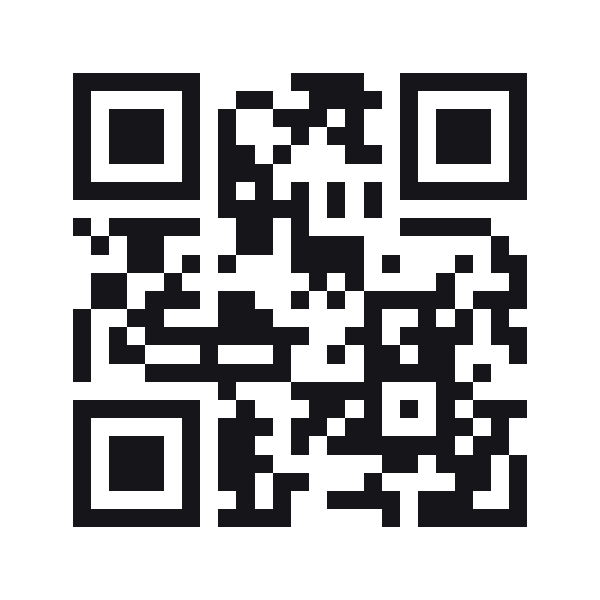
QR code for an X profile
Your profile URL in a code. The handle goes in without the @, and x.com is the host.
An X QR code stores the address of an X (Twitter) profile, which a phone opens in the X app.
Style this code — colour, shape, branding, frame and output
Colour & contrastThe ink, the paper behind it, and the three eyes. Every choice is contrast-checked as you make it.
ShapeHow the squares are drawn. The three eyes are styled apart from the data, because a scanner finds the code by them.
BrandingYour mark on the code. Every picture here costs scanability — the notes say how much, and the preview is the truth.
Frame & captionA border and a line of text around the code — the "scan me" that tells a passer-by what it is for.
OutputWhat comes out of the download buttons, and what the symbol actually carries.
Print-ready PDF
A press file at the finished size: 3mm bleed, crop marks and a trim box a print shop’s checks read. The code is drawn black on white whatever the design above — how a colour prints is something only a test print can show.
x.com, and why the old host is not used
The code encodes https://x.com/<handle>. twitter.com still redirects there today, and encoding a redirect adds a hop that can be withdrawn later — on a printed code, a withdrawn redirect is a dead code.
The handle is in the ink
Change it and every printed copy stops resolving to you. It is the same trade every static profile code makes, and worth thinking about before a print run rather than after.
It links, it does not follow
Scanning opens the profile. No platform lets a scanned code follow an account on someone’s behalf, which is worth knowing before printing "scan to follow".
X QR codes
Should I use twitter.com instead?
No. It works by redirect, and a redirect is a dependency you cannot fix once the code is printed.
Can it open a specific post?
This one makes a profile link. A post is a URL — use the URL type for that.
Does scanning follow the account?
No. It opens the profile and the person decides.
What happens if I change my handle?
The code stops resolving — the handle is what it carries. Anyone scanning an old print lands on a page that no longer exists rather than on your new one.
Want to change it after it’s printed?
Make it a dynamic code: it carries a short link you can point somewhere new at any time, and it counts every scan. A free account includes 5 dynamic codes and needs no card — and a dynamic code keeps redirecting even if you never upgrade.
Built to ISO/IEC 18004:2024 (the QR code symbology) · RFC 3986 (URI syntax)